What a "twitter ban service" is really offering in 2026
Search for a twitter ban service and you land on a split screen. One half is storefronts promising to get any X account suspended for a fee. The other half is X's own help pages, which explain that suspensions are something the platform decides and then scatter that explanation across four or five policy documents that never quite say the quiet part out loud. The space between those two halves is where money changes hands, and where most of it is wasted.
Here is the plain version the help pages circle around. X removes and suspends accounts through a tiered system: a warning, then a read-only or feature limit, then a temporary lock, then permanent suspension, with a fast lane straight to permanent for a short list of severe violations (X's enforcement options set out the ladder). The rulebook has also shifted in ways worth knowing before you pay anyone. The dedicated misinformation report category was retired around September 2023. Parody, commentary and fan accounts have had to carry explicit labels since the April 2025 authenticity update. There is still no native tool to bulk-delete another user's posts, free API write access has been curtailed, and a deactivated account sits in a 30-day grace window before it is gone for good.
None of that is a product you buy. It is a set of levers X pulls, or that a correctly filed report persuades X to pull. Our founder trained in media and defamation law before running takedowns full time, and the first thing we tell a caller is that the word "service" in "twitter ban service" is doing a lot of dishonest work.
"X ban service" and "twitter account ban service" — the same product, relabelled
Sellers rotate the wording to catch every search. An x ban service, a twitter account ban service, a "get X account banned" gig: these point at one mechanism, not three. Since the rebrand the platform answers to both names, so the vocabulary splits while the offer stays put. Someone will aim X's own reporting tools at an account you name and hope the automation moves before a human looks. What you are buying is not access to a suspension button. It is a gamble on a report queue everyone can already reach for free.
The three things you're actually paying for
Strip away the branding and every twitter ban service resolves into one of three products. The first is a report you could have filed yourself. The seller submits an ordinary in-app report for impersonation, or spam, or abuse, pockets your fee, and sends back a screenshot of the confirmation as if it were proof of work. Nothing was unlocked. You paid retail for something the app gives away.
The second is a coordinated brigade: a cluster of accounts, often bought or automated, all reporting one target in a burst. The pitch is that volume forces X's hand. It rarely does, for reasons the next section covers, and it leaves the exact fingerprint X's systems are tuned to catch.
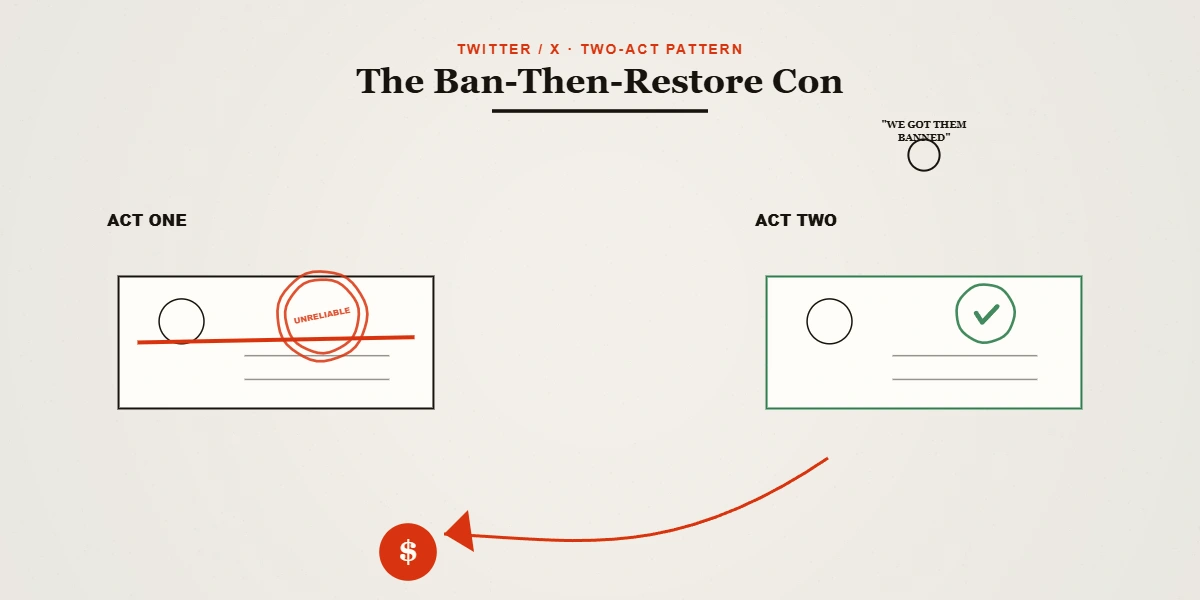
The third is the one that actually drains people — the ban-then-restore con. An operator gets a target locked, usually by tripping an automated flag with a fake impersonation or safety report, then reappears (sometimes under a different name) to sell the victim a "restoration". The Instagram version of this two-act con is well documented, and we took that market apart in a companion piece. On X the script is identical: the person who breaks the account is often the person who charges you to fix it.
Does mass-reporting an X account actually get it banned?
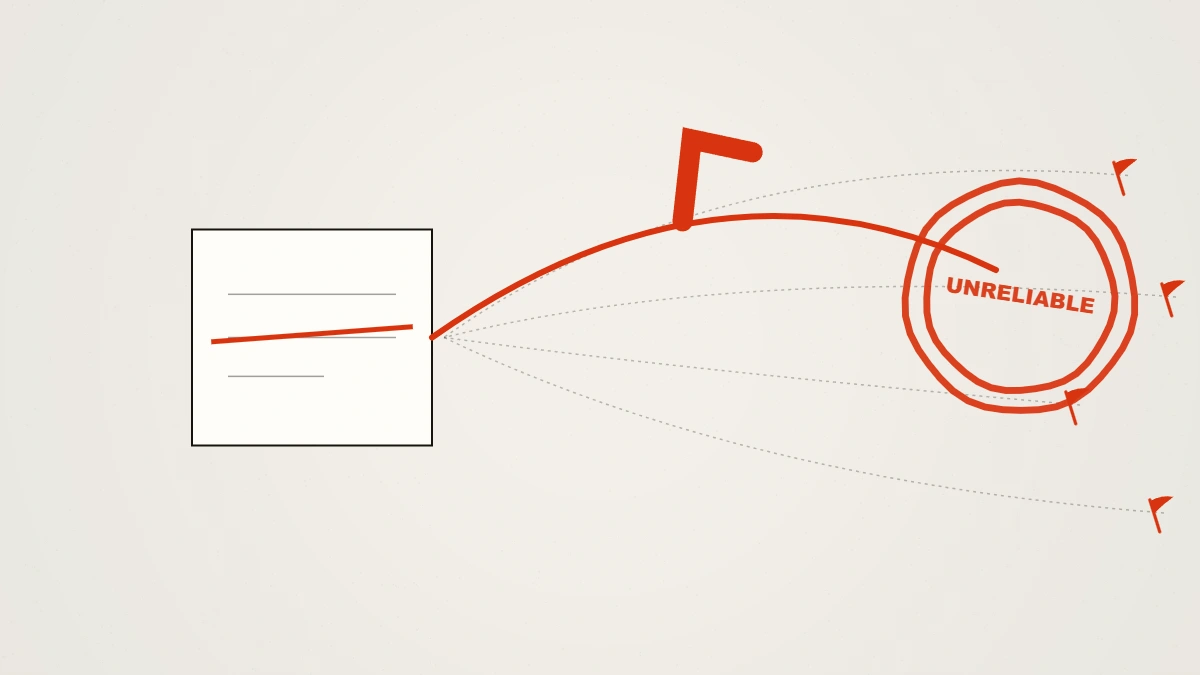
No, and this is the belief the whole market rests on, so it is worth being exact. X does not ban an account because a number of reports crossed a line. A report is a signal that routes content to review; the decision to act turns on whether that content breaks a rule, not on how many people flagged it. There is no threshold, no "ten reports and they're gone" figure, and nobody selling one has seen X's queue logic.
The scale explains why volume is beside the point. X's 2024 transparency reporting logged on the order of 181 million user reports against roughly 335 million enforcement actions, the large majority taken by automated systems before a report was ever filed. Human reports are the smaller lane feeding a machine that mostly acts on its own.
Coordinated reporting does worse than nothing. Filing in a burst from linked or throwaway accounts is itself a platform-manipulation breach under X's rules, and enforcement increasingly lands on the reporters rather than the target. We do not run report brigades, for anyone, at any price. If an account is genuinely harming you, one accurate and evidenced report beats fifty noisy ones.
If someone on X is impersonating you, doxxing you, or sharing intimate images of you without consent, get a confidential case review. We map the lawful route before any fee is named, and we never ask you to send us the material.
The lawful routes that actually reach X's enforcement
If the account attacking you is genuinely breaking X's rules, there is a path that reaches enforcement without a seller, and it is faster and more durable than any brigade. The work is matching the harm to the right instrument, then evidencing it cleanly.
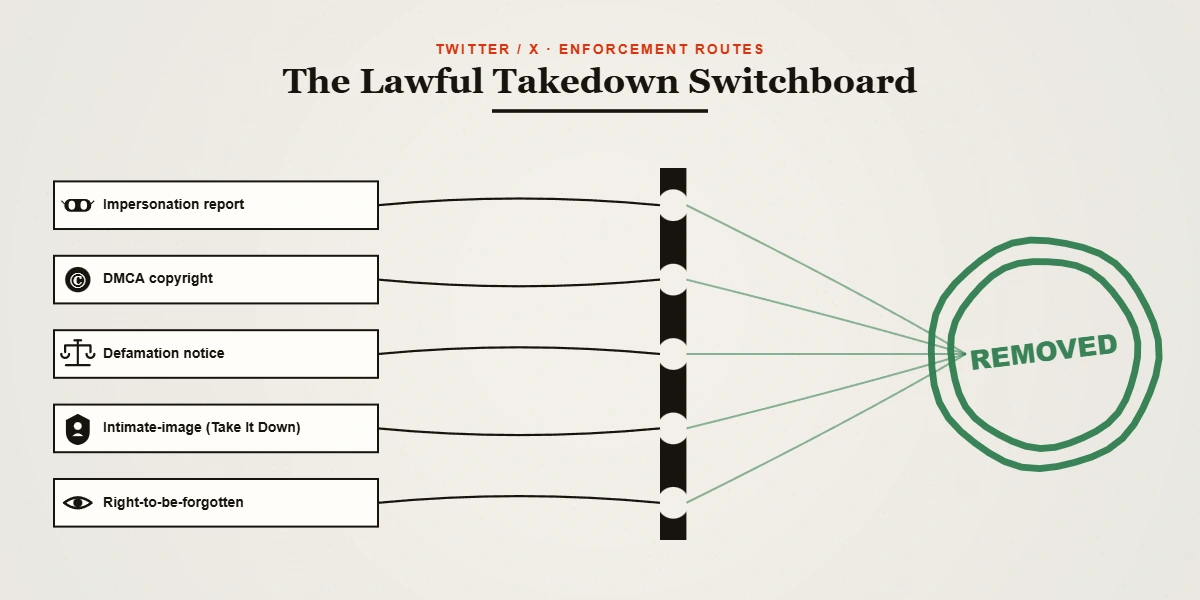
Impersonation of you or your business goes through X's suspended-and-reported-account channels, and since the April 2025 authenticity rules an unlabelled parody or copycat account is easier to action than it used to be. Doxxing and credible threats go through the private-information and violent-threat reports, backed by screenshots and, where the threat is real-world, a police report. Genuine copyright misuse — your photo or video re-uploaded without permission — goes through a DMCA notice under the US Copyright Office procedure. A false statement of fact about a named person or business is defamation, and that runs through counsel, not a report button. We lead with the correct route rather than the loudest one on every platform: the report mechanics Meta acts on follow the same logic, and so does the version for TikTok.
Non-consensual intimate images are the exception to every queue. They get urgent, free triage from us, and we never ask you to send the material. The StopNCII.org hash-matching service blocks the specific image across participating platforms without a human ever viewing your file, and in the US the TAKE IT DOWN Act now puts a short removal deadline on covered services. It is the single fastest lawful lever we have.
Can buying a ban get you in trouble? The copyright trap
Here is the exposure the storefronts never mention and no competing page spells out: the buyer carries legal risk too, and it is not one risk but several, depending on how the "ban" is engineered.
If the service manufactures a suspension with a false copyright claim — a bogus DMCA notice against the target's posts — that is the sharpest exposure. A knowing material misrepresentation in a US takedown notice is actionable under 17 U.S.C. § 512(f), and courts have awarded damages and legal costs for it. That statute is copyright-specific, though, which is where most write-ups get sloppy. It does not cover a fake harassment or impersonation report.
For those non-copyright routes the risk sits elsewhere. Commissioning a coordinated or fraudulent report puts your own X account in breach of the platform-manipulation rules, so the buyer, not only the seller, can be actioned. Paying someone to fabricate evidence against a named person or business can also shade into tortious interference or defamation in its own right, depending on your jurisdiction and theirs. Add the plain fraud risk on top, since most buyers of a twitter ban service simply lose their money, and the arithmetic almost never favours the purchase. This is general information rather than legal advice, but the direction of travel is clear. For every report we file we keep the client's rationale and evidence on record, which is exactly what our scope-of-engagement terms require.
Even a suspension doesn't erase it: removal versus suppression
Suppose the ban actually lands. It still may not solve your problem, and this is the part every "ban service" pitch leaves out. Suspending an account does not reach the screenshots of its posts, the quote-reposts that carried the claim onto other timelines, or the copies already saved to the Wayback Machine and a dozen scraper archives. X gives you no tool to force-delete someone else's repost of your grievance. The account can vanish while the content lives on.
There is also a class of post that will not come down at all. A true report from a news organisation, a genuine public record, a critic's protected opinion: X will not suspend these, and forging a notice to force it backfires. A bluffed takedown gets the content reinstated, exposes the sender, and hands the target a Streisand-effect spotlight worse than the original post. We will not file a report we do not believe to be true, and we never ask for your password or the target's. Those limits live in our disclaimer, not just in our sales copy.
When removal is off the table, the honest lever is suppression: pushing the result down with authoritative owned content, or, for personal information, a de-indexing request through Google's "Results about you" tool or a right-to-be-forgotten filing in the UK and EU. Our de-indexing lead handles that side, and he will tell you plainly when a true article can only be buried, not erased. Which lever fits depends on what the post actually says, and how we handle your case evidence is set out in our privacy notice.
What happens when you contact us
A confidential case review comes first, and it costs nothing. You tell us what the account is doing — impersonating you, running a smear, leaking an image, brigading your business — and we map the route that X and the law actually provide before any fee is named. NCII cases jump the queue for urgent, free triage. We will never ask you to send the images, request a password, or demand upfront payment in crypto.
What we will not do is promise a suspension we cannot deliver, forge a notice, or sell you the pay-to-ban product this page has spent its length dismantling. If a bought "ban" is what brought you here, the honest route is cheaper and it actually sticks. For more of how we work across platforms, the takedown briefings hub collects our practice notes; when you are ready, talk to our takedown desk.