
Every Facebook removal has a shelf life
Most people buying a takedown ask the wrong question. They ask how fast the post comes down. The question deciding whether the money was well spent is whether it stays down. On Facebook that varies enormously with which instrument was filed.
Sorted by how long the result holds, what a facebook content removal service files falls into four durability classes. This is not a map of document types; that map, covering policy reports, copyright notices, trademark complaints and legal notices, is in the route briefing. It is a map of what survives the filing. A copyright notice is the quickest to act on and the easiest for the other side to reverse, because the law making it fast also gives the poster a documented way to undo it. A community-standards report is slower and refused far more often, but the poster has no mechanism to reverse it and can only appeal to Meta. A deceased-person removal is close to permanent and cannot be appealed by anyone at all. A group removal, when it happens, is frequently undone within a week by the members themselves.
Those four classes are not tiers of one service, and paying more does not move you between them. Which is available to you is decided by what you can prove about the content and your relationship to it.
That spread is not a detail. It is the whole economics of the transaction. A firm quoting a price for "removal" without saying which of those four it intends to file, and how durable the result is, has sold you a filing rather than an outcome.
| Durability class | Typical speed | Who can undo it | What actually holds |
|---|---|---|---|
| Copyright notice (DMCA) | Hours to a few days | The poster, by counter-notice | Provisional, and it never stops being provisional |
| Community-standards report | Days to weeks | Meta, on the poster's appeal | Durable if it succeeds, but often refused |
| Deceased-person removal | Weeks, document-dependent | Nobody | Permanent and not appealable |
| Group removal | Slow, and admin-conduct dependent | The members, by re-forming | Low; the container goes, the community does not |
This briefing is about that last column. It covers the copyright lane in detail, because that is where the reversal risk lives; the strike arithmetic deciding whether a removal ever reaches the account behind the post; deceased-account requests, which are the one genuinely final route Meta operates; and groups, which reconstitute. If what you need is the route map for a specific object, whether that is your own account, someone else's profile, a photo you appear in or a Page you do not administer, that ground is covered in the route map for taking down a Facebook account, yours or theirs, and this page will not repeat it.
One framing note before the detail. Removal and suppression are different products. Removal takes the content off Facebook. Suppression leaves it there and pushes it out of the places people look. Almost everything below concerns removal, and the closing section is honest about where removal is simply unavailable. Our sibling briefing on how Meta's other app splits the job four ways covers the equivalent ground if the material you are chasing sits on Instagram instead.

The fastest lane is also the least permanent
Copyright is the most powerful instrument an ordinary person can point at Facebook, and the most misunderstood. It works because it is not discretionary. A community-standards report asks Meta to agree with you about whether something is abusive, and reasonable reviewers disagree about that constantly. A copyright notice asserts a legal right and puts Meta's own liability shield at stake, so the platform's incentive is to act first and adjudicate later. That is why it moves in hours rather than weeks, and why a facebook dmca takedown service can quote a turnaround a policy-report service cannot. The same statutory machinery producing that speed also builds in the reversal, which is the part that rarely appears in a sales conversation.
The trade, then, is speed for permanence. It is the only Facebook removal route with a built-in mechanism for the other side to undo it, and the only one handing your identity to the person you reported. Buyers rarely learn either fact until after they have filed.
What a facebook copyright removal claim has to contain
A complete claim does five things. It identifies the work you own and the infringing material precisely enough for Meta to find it. It states that you have a good-faith belief the use is unauthorised. It states under penalty of perjury that the information is accurate and that you are the rights holder or authorised to act for them. And it carries your signature and contact details. Meta takes these through a dedicated intake at the Facebook copyright report form, which exists separately from the ordinary in-app report button and is the only route producing a DMCA-grade result. Filing in the wrong place is the most common reason a strong claim goes nowhere: the in-app button routes to policy review, where copyright is not the test being applied. The claim dies quietly in a queue built for a different question.
The second failure is a claim filed by somebody who feels wronged rather than somebody who holds the right. Ownership is not the same as appearing in the frame, and it is not the same as having paid for the work either. A company that commissioned a product shot usually finds the copyright sat with the photographer all along, because an invoice transfers a licence rather than the right itself unless the contract says otherwise in terms.
What makes this a durability problem rather than a paperwork problem is how the failure lands. A notice filed without the underlying right does not simply get rejected and forgotten. It goes on the record, it identifies you to the other side, and it hands them a counter-notice they will win. Where the right is not yours, the honest routes are privacy and impersonation policy, and a desk filing a copyright claim anyway has exposed you to reach an outcome it could have reached lawfully by another road.
Your name travels with the notice
Meta is explicit about this and states it plainly: "We regularly provide the person who posted the content you are reporting with the rights owner's name, your email and the details of your report" (How copyright works at Meta, accessed August 2026). There is no anonymous copyright complaint on Facebook. The person on the other end learns who filed and how to reach them.
For a business enforcing against a counterfeiter that is usually acceptable and sometimes desirable, since deterrence depends on the other side knowing who is watching. For an individual trying to stop a harassing ex-partner republishing their photographs, it can be actively dangerous, and it is the reason we sometimes advise a client against the fastest available route. Where the safety risk is real we would rather file a slower policy report that does not identify the complainant, or route the matter through counsel so a solicitor's details travel instead of the client's home address. That choice belongs to the client, but it can only be made by a client who was told the disclosure happens, and being told afterwards is worth nothing. The same identity-evidence problem appears in a different form when a clone account is involved, which the two queues an impersonation report can land in works through in detail.
The put-back clock nobody mentions in the quote
Removal under the DMCA is provisional by design, and the provisionality does not expire. The person whose content came down may file a counter-notification asserting the material was removed by mistake or misidentification, and the statute sets no deadline by which they must do it. Once they do, 17 U.S.C. section 512(g) requires the provider to restore the material "not less than 10, nor more than 14, business days" after receiving the counter-notice, unless the rights holder has filed a court action in the meantime. Meta then puts the post back. Nothing has gone wrong procedurally; that is the system working as Congress designed it, and a service treating the put-back as a failure it can appeal has misunderstood the statute it just used.
The practical consequence is worth stating plainly, because it is routinely described backwards. That ten-to-fourteen-day figure is not a countdown to safety after which your removal is secure. It is a countdown that only starts if and when the other side responds, which they may do next week or next year.
Two consequences follow, and any honest facebook removal service will raise both before taking your money. First, a copyright takedown against a determined opponent is the opening move in a dispute rather than the end of one, and you should know before filing whether you are prepared to sue, because the counter-notice puts that question to you on a two-week clock rather than at your leisure. Second, a knowingly false claim carries its own exposure under section 512(f), which we treat as a hard limit on what we will file. The economics of that exposure, and who ends up carrying it, are set out in what these listings actually charge and who carries the risk. Platforms publishing their own copyright form numbers behave similarly, as our LinkedIn takedown briefing shows, and the durability problem is near-identical on video platforms, where what it takes to make a removal hold covers the same clock.
The only route that reaches past the post to the account
Removing a post and removing the account that posted it are different outcomes, and clients routinely buy the first while describing the second. A single successful filing takes down one object. What escalates to the account is accumulation, and Meta publishes the arithmetic.
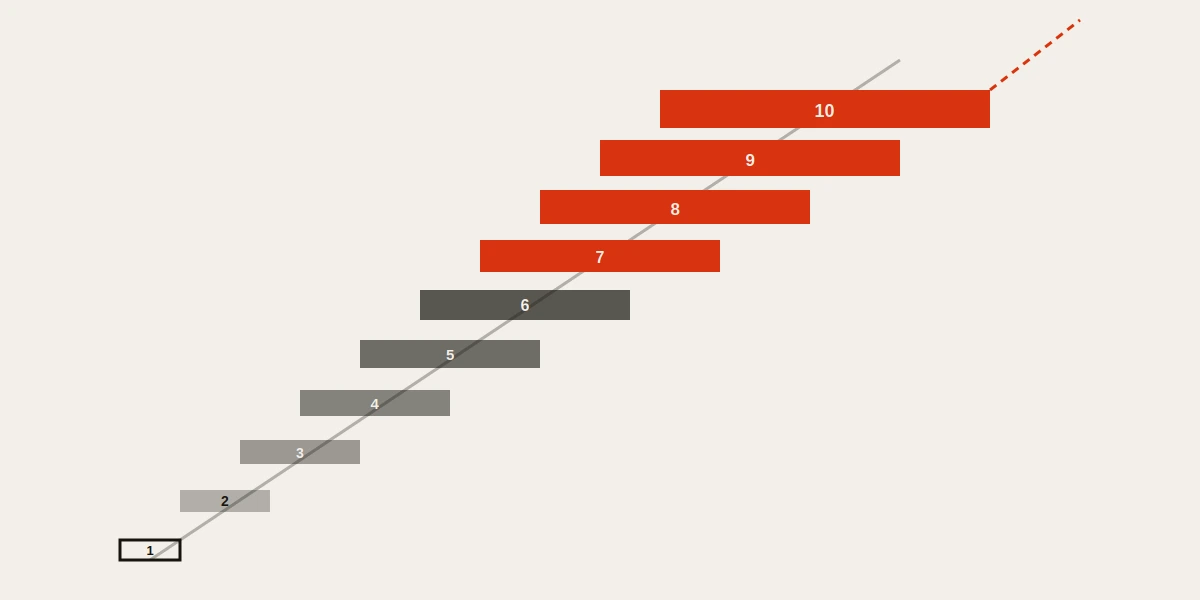
The ladder, as set out in Meta's Transparency Center, runs like this for Facebook accounts. A first strike is a warning and nothing more. Strikes two through six bring restrictions on specific features, such as posting in groups, for a limited period. A seventh strike triggers a one-day restriction on creating content, which covers posting, commenting and creating a Page. The eighth brings three days, the ninth brings seven, and ten or more brings a thirty-day restriction on creating content (Restricting accounts, Meta Transparency Center, accessed August 2026). Severe categories sit outside that ladder and can attract additional restrictions immediately. A single credible threat is treated differently from ten instances of spam.
The numbered ladder tops out at a thirty-day content restriction, but the ladder is not the end of the document. Meta states on the same page that "for most violations, if you continue to post content that goes against the Community Standards after repeated warnings and restrictions, we will disable your account". Disablement is therefore a documented endpoint on the ordinary track, not a rarity reachable only through severe categories. What the published material does not offer is a number: there is no strike count at which an account is deleted. The escalation past thirty days is described in words rather than arithmetic.
That distinction is the one a buyer needs. A facebook post removal service can point at a real path from repeated violations to a disabled account. What it cannot do is tell you where on that path a target currently sits, or shorten it. Intellectual property runs a parallel track with its own consequences, where Meta disables "the accounts of repeat infringers in appropriate circumstances" and also acts against "other sources of content that may be engaging in repeat infringement, such as Facebook Pages" (How we protect intellectual property rights, accessed August 2026).
There is a second-order effect worth knowing. Strikes are not permanent fixtures: they age out, and Meta has run a limited scheme allowing a first strike to be cleared by completing an educational module. If content is restored on appeal or because a rights owner withdrew a report, that restoration is taken into account under the repeat-infringer policy. The count you are relying on may therefore not be the count Meta holds, and a plan built on getting somebody to a particular number is building on a figure you cannot see and cannot audit. Nobody outside Meta can read another account's strike history, which means any vendor claiming to know how close a target is to removal is describing something they have no access to. Treat a specific number offered in a sales conversation as invented, because there is no interface anywhere that would let them read it.
Pages and profiles do not carry strikes the same way
A personal profile, a Page and a Group are three different objects in Meta's enforcement model, and the strike does not land where most people assume. It is recorded against the person who posted the content. Where that person posted to a Page or Group they manage, Meta says "the strike may also count against that Page or group", and for a Group, content that an admin or moderator approves counts against the Group as well (Counting strikes, accessed August 2026).
So the accounting runs outward from the individual rather than inward from the object. A removal against a Page an individual personally posts to generally does reach that individual. What it does not reach is a Page they administer but did not post to, which is how a restricted person can still hold rights over a Page that keeps publishing. Anyone selling removal of "the account" should be asked which of those three objects they mean. The filings, the evidence and the realistic outcome differ for each. A quote that does not distinguish between them has not been priced against anything specific.
The practitioner's note is unglamorous. When we file these, we file few and we file clean, because a rejected claim does nothing and a sloppy one can expose the client. Nine well-evidenced filings on genuinely infringing material will move an account further than nine hundred reports on content breaking no rule, and volume is not a substitute for standing. That mechanic is set out from the enforcement side in what Meta actually acts on, and when strikes expire, and the equivalent copyright-to-termination path on another platform is traced in what actually terminates a channel.

The one removal Meta will not reverse
If you have arrived here after a death in your family, the practical position is simpler than the rest of this page and it costs nothing. Meta operates its own free process for both memorialising and removing an account, and for most families that process is the whole answer. You do not need a firm. We would rather say so plainly than let you assume otherwise.
There are two different requests and they lead to opposite places. Memorialisation preserves the profile, adds "Remembering" beside the name, and keeps existing posts visible to the people who could already see them. Removal deletes the account permanently. Both begin at Meta's request to memorialise or remove an account intake. Anyone can ask for memorialisation with proof that the person has died, such as an obituary or a death notice. Permanent removal is restricted to immediate family or an executor, and asks for proof of death together with proof of your authority to act, commonly a death certificate alongside a birth certificate, power of attorney or probate document. Where the account belonged to a minor, a birth certificate is generally required as well.
Two details cause most refusals, and both are avoidable. The documentation has to match the name on the profile. Where a person used a shortened name, a married name or a nickname on Facebook, the paperwork will not line up, and the request stalls until you can bridge the gap with a document showing both. Redact what is not needed before you send anything. National insurance or social security numbers, financial details and home addresses have no bearing on the request. There is no reason to hand them over.
The finality is the point, and it is why this section sits in a briefing about durability. Removal of a deceased person's account is permanent, it is not appealable, and nothing is restored afterwards. Photographs existing nowhere else go with it, along with the messages, the tagged albums and every comment the person left on somebody else's page. Families who are unsure often memorialise first and decide later, which preserves the option and costs nothing to reverse. Families who delete have made a decision that cannot be revisited by anyone, including Meta. One thing to be clear about, because well-meaning guides get this wrong: you cannot download a copy of somebody else's account before deciding. Only a legacy contact appointed before the death can do that, and only where the account holder switched the option on beforehand.
That single constraint is the strongest practical argument for memorialising first. It preserves everything and stays reversible. Removal preserves nothing and reverses never. If it would help to talk it through with someone who has handled these, the people who file these requests under their own names are here, though for a straightforward request Meta's own form remains the right first step.
What a legacy contact can and cannot do
A legacy contact is chosen by the account holder while they are alive, which makes it a piece of planning rather than a remedy. If it was not set before the death, it cannot be added afterwards. Once an account is memorialised, the legacy contact can write a pinned post at the top of the profile, update the profile and cover photographs, respond to new friend requests, and request that the account be removed entirely.
The limits matter more than the powers. A legacy contact cannot log in to the account. They cannot read private messages, and Meta treats that boundary as absolute, so the correspondence stays closed regardless of who asks or what they can prove about their relationship to the person who died. They cannot delete or edit existing posts, and they cannot remove friends. Families sometimes arrive expecting a legacy contact to be a key to the account and find instead a narrow set of custodial permissions bolted to the outside of it, which is a genuine disappointment when the thing they wanted was a message thread nobody else can reach.
The Pages and Groups the person administered
This is the part families discover late, and the documented outcome surprises most of them. A profile is only one of the things a person may have been running, and memorialising the profile does not leave a Page they administered untouched. Meta states that "Pages with a sole admin whose account was memorialised will be removed from Facebook if we receive a valid request" (About memorialised accounts).
Read that before filing rather than afterwards. If the Page carries a business, a customer list or years of reviews, the moment to resolve who else holds admin rights is while the estate is being organised, not after memorialisation has been requested. Recovering access to a Page is a separate matter again, running through Meta's business support as an admin-access request rather than through the bereavement forms. Where the person administered a community Group, the position is different once more and is covered further down this page.
When the family does not agree
Contested cases are the only ones where a firm is genuinely useful here, and they are more common than people expect. A memorialised profile becomes a place where relatives disagree in public. An estranged relative files for deletion while others want the profile kept. Occasionally a profile of someone who has died becomes a target for abuse in the comments, which is a straightforward content problem layered on top of a grieving family, and it is handled through the ordinary reporting routes rather than through the deceased-account process.
Where a dispute is live, the useful work is documentary. It means establishing who holds authority under the estate, assembling proof matching the profile name, and making one clean request rather than three competing ones that cancel each other out. Meta will not adjudicate a family disagreement, and the first properly evidenced request from a person with standing is generally the one deciding the matter.
Groups get restricted far more often than they get removed
A facebook group removal service is selling the least durable product on this list. Whole-Group removal is real and Meta documents it, but the route to it does not run through the buyer. Enforcement escalates through restriction first: repeated violations bring removal from recommendations, reduced distribution, monetisation limits for Pages, and a requirement that admins approve every post before it appears (Restricting accounts, accessed August 2026). Beyond that sits deletion. Meta states that it "will remove Pages and groups that repeatedly violate the Community Standards", and names the grounds: violations in the Group's name, description or cover photo, violating content created by admins or moderators, and admins or moderators approving violating content from members (Removing Pages and groups, accessed August 2026).
Read those grounds again and the commercial problem becomes obvious. Every one of them turns on what the admins do: what they named the Group, what they posted in it, what they waved through from members. None of them turns on how many outsiders complain, which means the lever a removal service is selling you is not connected to the mechanism that produces the outcome. A vendor quoting confidently for group deletion is selling something that exists but that they cannot cause, priced as though it were the same job as removing a post. The honest version of that conversation names the admins' conduct as the variable and admits the buyer does not control it. It is not the same job. That gap is where most of the disappointment in this market is generated.
For someone being discussed in a hostile Group, that produces a frustrating result. The Group survives, its reach shrinks, and the content about you remains readable to the members. This is one of the clearest cases on Facebook where the honest advice is to stop pursuing removal of the container and start pursuing removal of specific posts inside it, each on its own merits, or to accept that suppression rather than removal is the realistic goal.
Reporting to the admins is not reporting to Meta
Facebook offers two report paths inside a Group and they go to different places. Reporting a post to the Group's admins routes it to the volunteers running the Group and no further, so if the admins are the problem, or are the people posting, that path is a closed loop. Reporting the content to Facebook, or reporting the Group itself, is what puts the matter in front of Meta's review systems.
People filing on their own behalf choose the wrong one constantly, then conclude Facebook ignored them. It did not see the report. Check which button was used before escalating anything, because a fortnight of admin-routed reports produces no record at Meta at all.
What a group filing has to show
Reporting a Group works differently from reporting a post, and the difference trips up people who have already had a post removed successfully. A single unlawful post inside a Group is evidence against that post. Reaching the Group itself requires showing the Group is the vehicle rather than the venue, which means demonstrating a pattern: the stated purpose in the Group's own description, pinned content directing members at a target, admins participating rather than moderating, and repetition over time rather than one bad thread.
Build that as a dated bundle before filing anything. Capture the Group description and rules as they stand, screenshot pinned posts with their timestamps visible, record the admin list, and log each instance with its URL and date rather than describing it in prose. Filings that succeed against Groups read like a chronology; filings that fail read like a complaint. The distinction is not rhetorical, because the reviewer is deciding whether a rule covers the Group as an entity. That decision needs the pattern laid out, not asserted.
The Group that reconstitutes, and the Group with no admins
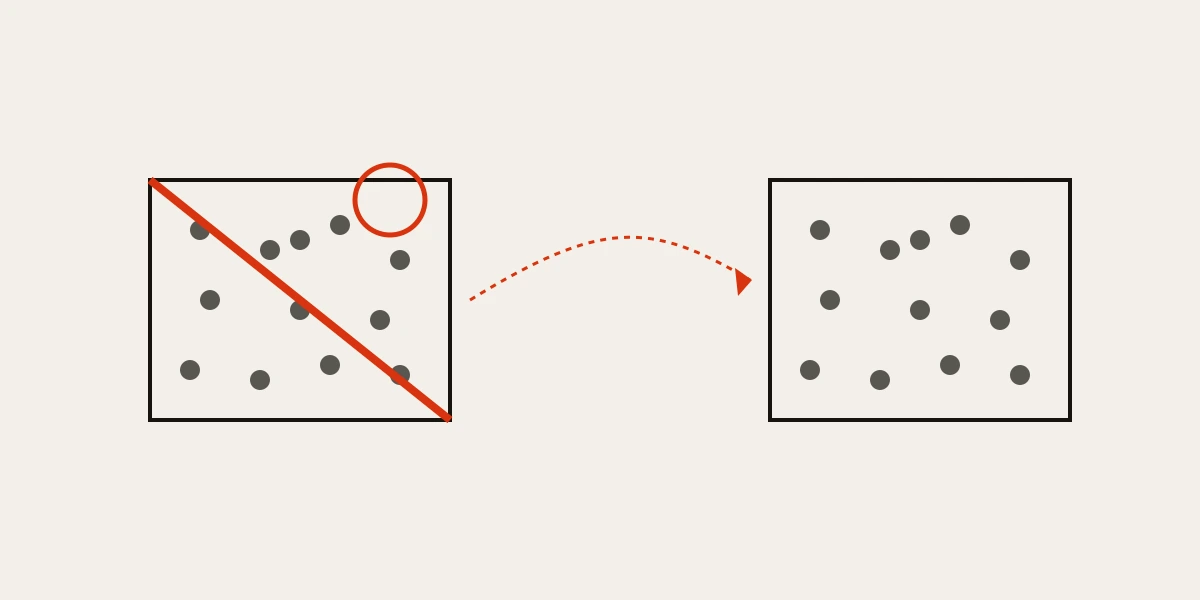
Even a successful removal has a rebuild problem. A Group is a membership list plus a name, and both survive deletion of the container, so members re-form under a near-identical name within days, often with the same admins and a note explaining where everyone went. Enforcement against the admins is what changes the arithmetic, since a person carrying restrictions cannot readily create the replacement. The same dynamic drives copies on other platforms, which is why when the original comes down and the copies do not is worth reading alongside this, and the closest structural analogue in our practice is set out in how channel and group takedowns run elsewhere.
A Group whose only admin leaves, deactivates or deletes their account behaves differently again. Meta prompts that admin to invite a replacement, and where nobody is selected or accepts within seven days, the Group is automatically paused (what happens when a Facebook group doesn't have any admins). Pausing is not removal. Posting stops, but nothing already published vanishes, and a request premised on nobody running the Group is misreading what that state actually triggers. Note the interaction with the section above: where the sole admin has died and the account is memorialised, this is the mechanism that decides what happens to everything they ran.
What happens after a removal holds
Durability has a second half that quotes almost never cover. A filing that succeeds removes a copy; it does not remove the file from the hard drive of the person who posted it, and it does not stop them posting it again. Re-uploads are the normal case rather than the exception, and on Facebook each new upload is a new object requiring its own filing. A notice covers the URL it named, not the material in the abstract.
For copyright matters that arithmetic is manageable, since a rights holder who has filed once has the evidence assembled and each subsequent notice is faster than the first. For policy matters it is harder, because a fresh reviewer sees a fresh report and the history of previous removals is not visible to you. What changes the pattern is not filing faster but building the record that turns a series of separate incidents into one documented course of conduct, and that record is also what a solicitor needs if the matter ever moves off the platform. Keep the reference numbers, the dates and the outcomes of every filing in one place from the first one onward. Clients who do this arrive at a legal consultation with a case; clients who do not arrive with a story and spend the first meeting reconstructing dates from memory.
Monitoring matters more than most people expect. It is the part clients most often decline and later regret. A removal nobody checks is a removal being trusted on faith, and because the counter-notice has no filing deadline, a single diary entry is not enough. Check at three weeks, then again at three months. If the content is back, a counter-notice was filed. The next decision is a legal one rather than a platform one.
How to tell which kind of removal you are being sold
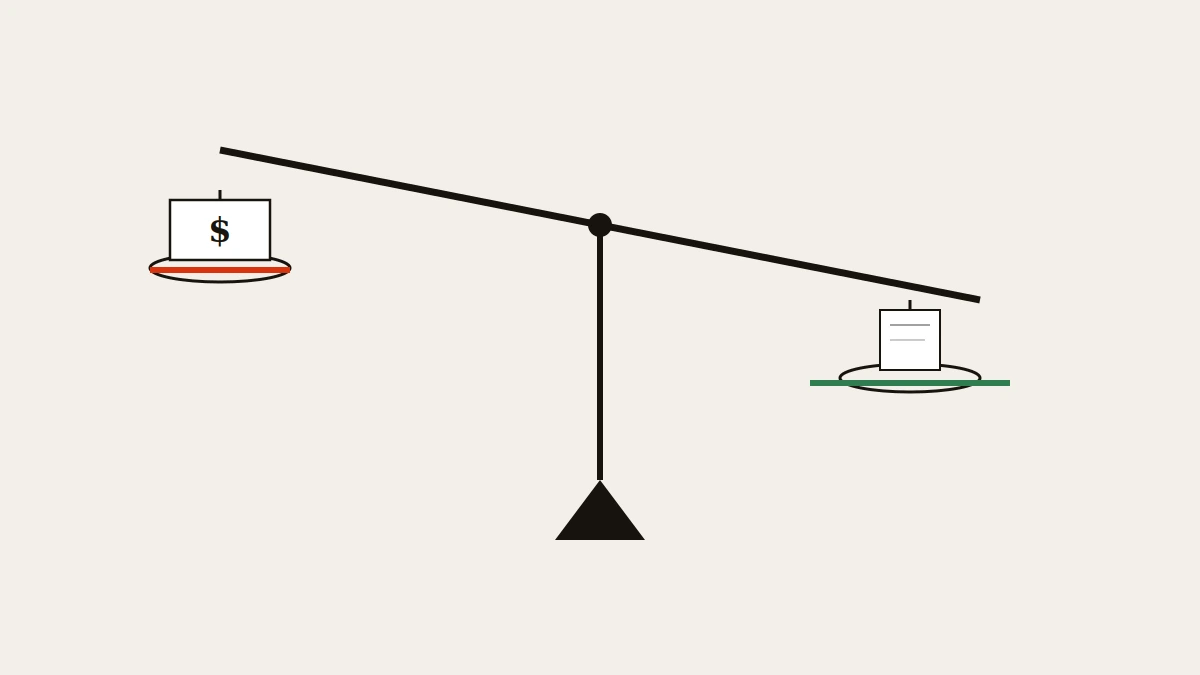
Price tells you almost nothing about durability, and the market is priced as though it does. Vetting a facebook post removal service is therefore a procedural exercise rather than a commercial one, and a desk that files its own notices can answer all of the following in a sentence each.
- Which instrument, by name? "We will submit a DMCA notice through Meta's copyright form" is an answer. "We will get it removed" is not.
- Does my identity travel with it? On the copyright lane it does, and you are entitled to know before deciding rather than afterwards.
- What happens if a counter-notice arrives? Listen for whether litigation is being quietly assumed on your behalf, and who pays for it.
- What does this do to the account behind the content? Usually nothing, unless strikes accumulate on the repeat-infringer track.
- What will you refuse to file? A desk with no refusals has no standards, and the refusals are the most informative thing on the call.
Two answers should end the conversation. Anyone offering a guaranteed removal is either misinformed about the counter-notice mechanism or willing to tell you something untrue to close a sale, and on the copyright lane the guarantee is arithmetically impossible because the other side holds a reversal right the seller cannot revoke. Anyone asking for your Facebook password is asking you to hand over your account, and no lawful filing has ever required it. We do not ask for credentials, we do not file notices we cannot stand behind, and we say when suppression is the honest recommendation even though it is the harder thing to sell. A desk worth hiring will also tell you when the job does not need hiring at all, which on this page happens twice over: the deceased-account route is free and runs through Meta's own form, and a straightforward copyright claim on material you plainly own is something most rights holders can file themselves in an afternoon.
How long each of these actually takes
Timelines get quoted with a confidence nobody has earned, so here is the honest shape of them. A properly formed copyright notice is the fastest thing on the list and can act within a day. Knowing whether it held is a different matter, because the counter-notice can arrive at any point and the restoration window runs ten to fourteen business days from there. A community-standards report on clear-cut material moves in days. On anything requiring judgement it can sit for weeks. A refusal often arrives with no reasoning attached.
Deceased-account requests run on document time rather than review time. Families who send complete, name-matching paperwork tend to see the matter resolved in a small number of weeks; families sending partial documentation can spend months in a loop of resubmission, which is the single strongest argument for assembling everything before filing once. Group filings are the slowest and least predictable of all, because the decision being asked for is the largest, and a refusal at that level rarely explains itself. Anyone quoting you a fixed turnaround across all four of these is quoting a sales figure rather than an operational one. The tell is the absence of a range.
On where the money actually goes in this market, our teardown of the panels sold as shortcuts and what a fee cannot unseal are both instructive, as is what a reporting fee buys on another platform. The evidence bar each claim type carries is set out in our X removal-desk briefing, and the ephemerality problem in how to take down a Snapchat account is the same durability question wearing different clothes. Where the target is a cloned profile rather than a post, facebook fake account removal runs through the impersonation route rather than this one, and a facebook page takedown service is filing against a different object again; both are mapped in the route briefing linked at the top of this page.
If something on Facebook is doing real damage and you want a straight assessment of which instrument applies and how long the result will hold, ask for a confidential case review. We will tell you if the answer is Meta's own free form, and we will tell you if the answer is that nothing comes down.
What no filing returns
Some material does not come down, and a facebook account removal service that will not say so early is selling hope. Truthful reporting by a news organisation is not removable because it is unwelcome. Genuine public records are not removable. Opinion, including opinion expressed unpleasantly, is protected in most jurisdictions and is not a policy violation merely because it is wrong about you. Filing a forged or bluffed notice against any of that is a route to a worse position rather than a better one: it invites a counter-notice, it can expose you under section 512(f), and it reliably attracts more attention to the material than the material was getting on its own. We have seen a single ill-judged notice turn a post nobody had read into a story about somebody trying to suppress it.
Where removal is unavailable, the honest instrument is suppression. That means de-indexing the URL where the law allows it, filing under the right to be forgotten in the UK and EU so the result stops appearing against searches for your name, and building authoritative content that outranks the material. It is a different product with a different timeline, measured in months rather than days, and it does not pretend the content has gone. It changes who encounters it. That approach is set out in when removal is off the table and suppression is the instrument. The full statement of what we will not do sits in the limits we publish rather than bury, and how we handle the evidence you send us is in our privacy notice.
One category runs on a different clock. If intimate images have been shared without your consent, do not send them to us or to anyone else. Adults should use StopNCII.org, which hashes the image on your own device so the file itself never leaves it and the hash blocks matching uploads across Meta's platforms. If the person in the images is under 18, use NCMEC's Take It Down instead, and treat it as a police matter first; in the UK, Childline and the Internet Watch Foundation run Report Remove for under-18s. Contact us the same day either way. That triage is free, and we do not need to see the material to start. The rest of our platform-by-platform work sits in the briefing archive.