Three different things are sold as a "TikTok ban service"
Type the phrase into Google and the first page answers a question you did not ask. Wikipedia's entry on efforts to ban TikTok in the United States takes the top slot, a TechTarget explainer sits beneath it, and the commercial results — the ones you probably meant — begin somewhere down in the tail. That is not a ranking accident. Two unrelated events share one phrase, and a third meaning hides behind a near-identical one.
The first is the national ban: a country-level restriction on the app itself. In the United States that story has closed. The divest-or-ban statute forced a sale, the joint venture completed on 22 January 2026 with ByteDance retaining 19.9 per cent, and the app has run continuously since a roughly fourteen-hour outage in January 2025. None of it reaches a single account.
The second is what most buyers actually mean: a paid arrangement to get one named account removed, advertised as a tiktok account ban service or, in the clumsier phrasing people really type, a ban tiktok account service. Add the word "account" to your query and the national-ban results clear almost entirely, leaving storefronts, explainer posts and marketplace threads.
The third is quieter, and it is the only one with a real profession behind it. A tiktok takedown service, or a tiktok account takedown, usually means copyright and legal removal work — brand-protection outfits and law firms filing notices, not report brigades. Different vendors, different price band, different mechanism.
Buying the wrong one is expensive. Our founder trained in media and defamation law before running takedowns full time, and separating those three meanings is the first five minutes of nearly every conversation we have on this subject. The caller who needed the third thing has usually already paid for the second. What TikTok itself will and will not act on is a separate question again, and we covered the enforcement side in an earlier briefing.
What the market actually charges
Prices in this market are public, which makes this the easiest section of the page to check and the one sellers would rather you skipped.
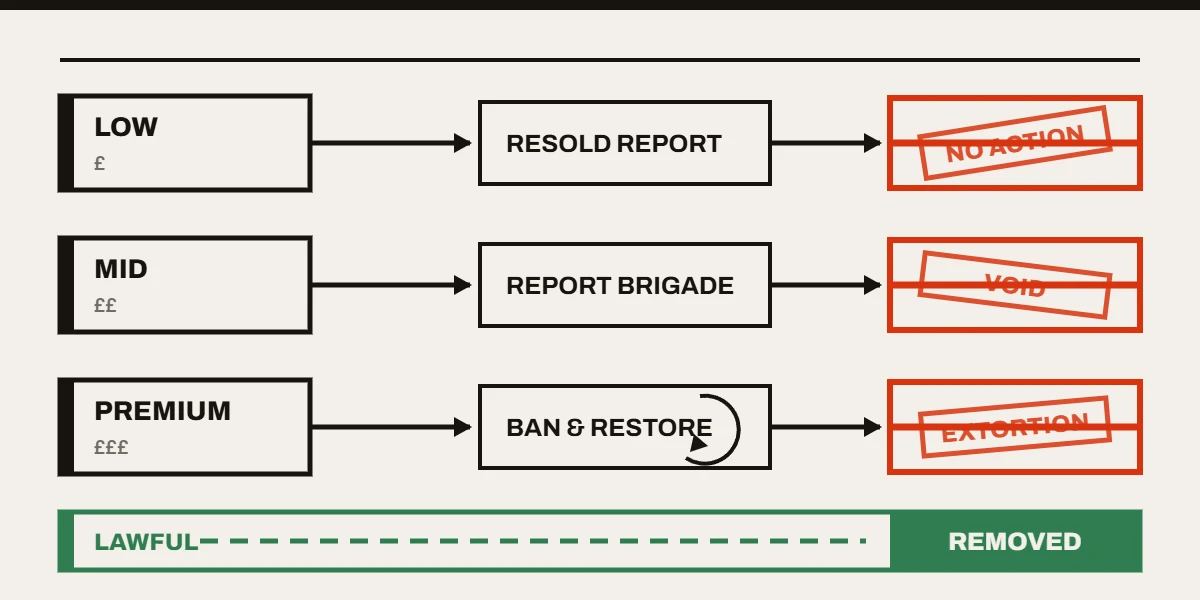
Three tiers exist. At the bottom sits Fiverr, whose "TikTok ban" gig hub collects dozens of listings between roughly $10 and $100. Nothing at that price is beyond you: it is the in-app Report button, resold.
The middle and upper tiers live on SWAPD, a broker forum where deals run through escrow. As of August 2026 its TikTok services board carries a removal listing from $250, another quoting $300 plus fees with a stated turnaround of 24 hours for a personal account and 72 for a business one, a third at $590 plus fees averaging four to five working days, and a priority tier opening at $1,000 that reaches about $1,500 once "appeals support and documentation" is bundled in.
How much does it cost to get a TikTok account banned?
The honest answer is that the sticker price and the cost are different numbers. Listings run from about $10 on gig marketplaces to roughly $1,500 at the top of the broker forums, and the spread does not track capability, because no vendor at any tier holds a lever the others lack. What the ladder tracks is confidence: how much theatre a seller is willing to build around the same three products. The low tier resells a free report. The middle tier runs a coordinated reporting push. The top tier attaches paperwork, a turnaround promise and an appeals add-on to a decision it still cannot make. Read the escrow terms and this becomes plain — escrow releases against delivery of an agreed action, not against an outcome TikTok controls, so a seller can be paid in full for a campaign that changed nothing.
That structure will look familiar to anyone who has priced the equivalent market elsewhere. The same tiering, and the same gap between the invoice and the mechanism, shows up in the Telegram panel trade and in the four supply routes behind Instagram's report panels.
Does a TikTok ban service actually work?
No, and the reason is arithmetic rather than opinion. TikTok's Q1 2026 enforcement report records 184,012,576 videos removed globally, about 0.5 per cent of everything uploaded, with 178,014,154 of those caught by automated detection and 99.2 per cent taken down before any user reported them (TikTok Transparency Centre). User reports are a thin supplementary stream feeding a system that overwhelmingly polices itself. Applying pressure by weight to that stream is a poor bet.

One figure in the same report deserves more attention than it gets: 8,838,710 videos were reinstated after further review, roughly one reversal for every twenty-one removals. Even a removal that lands is not final. A vendor selling permanence is selling something the platform's own numbers contradict.
I am not going to re-run the automation teardown here, because we already took the TikTok reporting stack apart in detail, and the same anatomy on X reaches the same conclusion. The short version is that TikTok publishes no reporting endpoint, so every "bot" is browser automation driving the ordinary report screen, and TikTok's safety team has stated in writing that mass reporting produces neither automatic removal nor a greater likelihood of it.
What "tiktok ban service reddit" actually returns
People append "reddit" to a query when they want a verdict from someone with no commission at stake. It is a sound instinct, and on this particular phrase it fails in an interesting way.
Search it and you do not get a Reddit consensus. You get the national ban again — news coverage, Wikipedia, legal explainers — because the phrase is dominated by the wrong meaning before the modifier ever gets a chance to work. The threads people expect to find, comparing vendors and reporting outcomes, are not what surfaces. That absence is worth naming plainly, because every competing page on this keyword implies a body of buyer testimony that the search itself does not produce.
Where community discussion does exist, it clusters around the adjacent mass-reporting and panel searches rather than this one, and its content is consistent: no verified bans delivered, payments sent to sellers who stopped replying, accounts lost after logins were handed over. We traced the same pattern through what an Instagram ban service actually sells and through the X mass-report market. Treat the missing evidence as evidence.
Is it illegal to pay for a TikTok ban service?
This is the question the whole cluster is asking and none of the ranking pages answer. It deserves a direct treatment, offered as general information rather than legal advice, since exposure turns on where you and the target are.
Start with the platform layer. Coordinated reporting breaches TikTok's integrity and authenticity rules, and the detection built to disrupt covert influence operations reads a report brigade easily — linked accounts filing the same complaint in the same window. If your own login sits inside that swarm, you are inside the breach. Then the copyright layer, which is sharper than most buyers expect: TikTok's own copyright infringement form warns that "Misuse of the removal request webform, such as submitting false information, may result in the suspension of using the webform or other legal consequences", and in the United States a knowing material misrepresentation in a takedown notice is separately actionable under 17 U.S.C. § 512(f). That statute is copyright-specific, a distinction we set out when the same question came up on X, so it does not reach a faked harassment report.
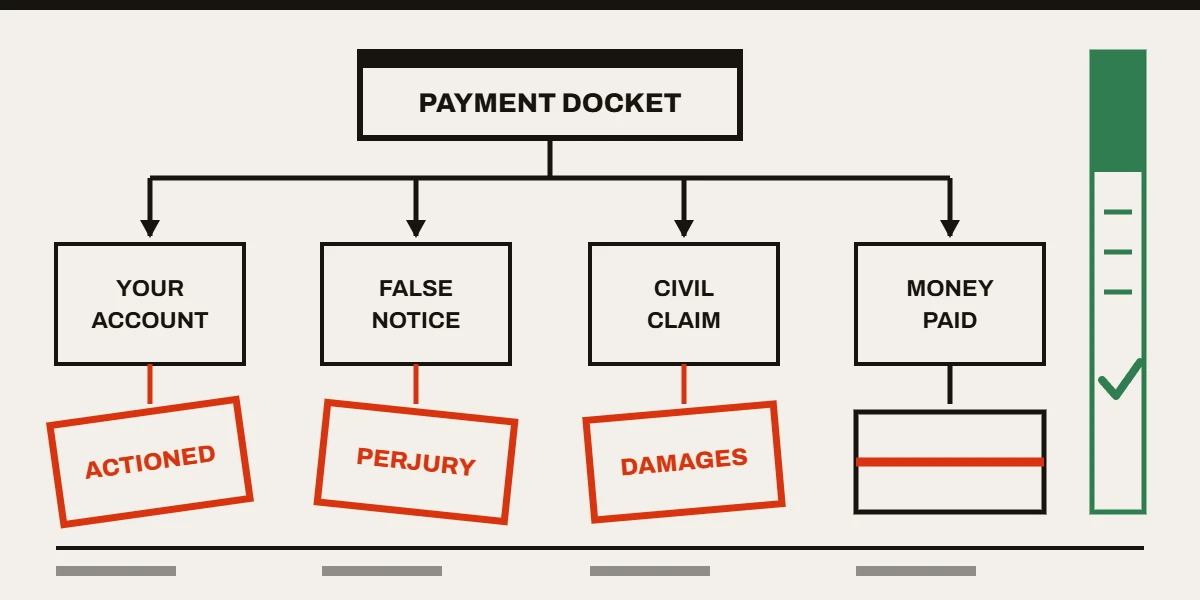
For readers in England and Wales there is a lane the American write-ups miss entirely. The Protection from Harassment Act 1997 turns on a course of conduct — conduct on at least two occasions — and it does not require you to have carried that conduct out personally. A campaign you commissioned and paid for is still a campaign you procured. Running the other way, a seller who takes your money on a false representation of what they can deliver may be committing fraud under section 2 of the Fraud Act 2006, which sounds like your protection until you notice the practical problem: pursuing it means describing, in writing, what you hired them to do.
Escrow does not solve this, and it is the misreading I correct most often. Escrow protects against non-delivery. It says nothing about whether the delivered act was lawful, and a released payment is a record of the transaction rather than a defence of it. Buying the campaign puts no distance between you and it — the point we made about credential handover on WhatsApp and about the litigation record behind Facebook's report tools. We do not run report brigades, for anyone, at any price, and the limits we work inside are written down rather than implied.
TikTok account takedown is a different purchase
Here the vocabulary finally lines up with something real. A tiktok account takedown is a legal instrument, not a favour, and the firms doing it are visible, incorporated and answerable.
The confusion is worth clearing because it costs people money in both directions. Someone who needs a defamatory video removed buys a ban service and gets nothing. Someone who wants a rival silenced approaches a takedown firm and is turned away, correctly, because there is no lawful ground.
What a TikTok account takedown service actually files
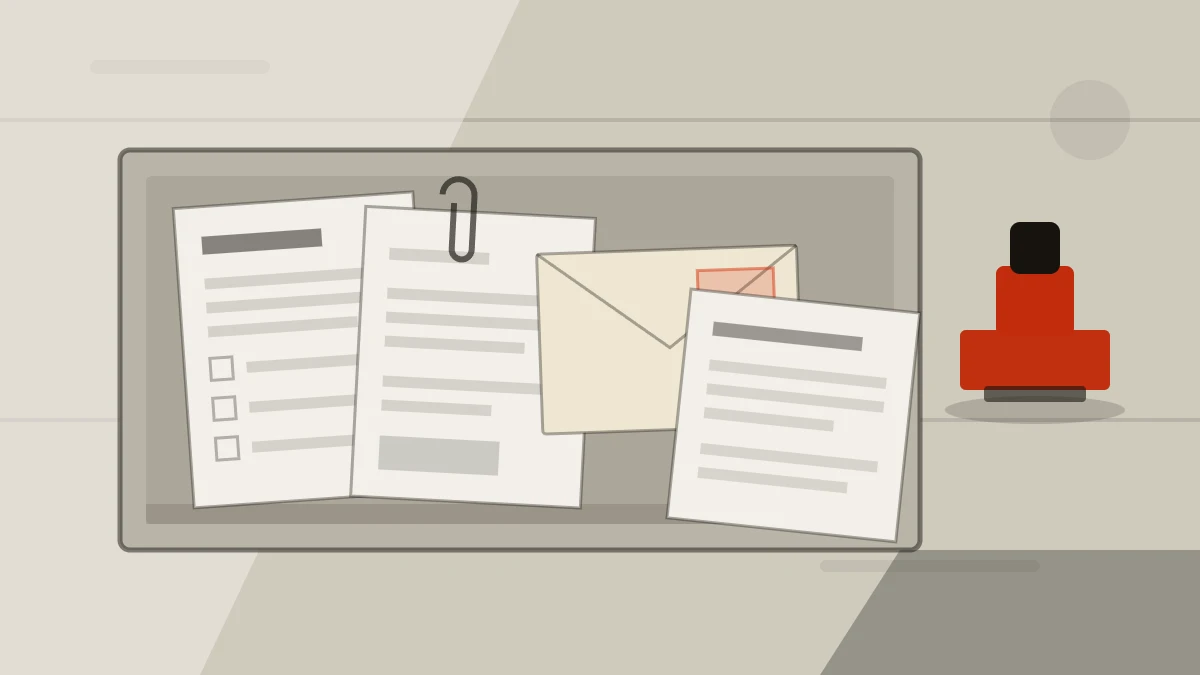
Four instruments reach TikTok, and matching the harm to the right one is most of the work. A Community Guidelines report under the correct category is the fastest lawful step for harassment, hate and minor-safety content, and it is anonymous — TikTok does not disclose who filed it. A DMCA notice, filed under the US Copyright Office procedure, is the route when a video uses footage or photographs you own, and unlike a report it carries your name. A defamation notice through counsel reaches false statements of fact that no guideline covers. For intimate images shared without consent, StopNCII.org matches on a hash so participating platforms can block the file without anyone opening it. Filing under the wrong instrument wastes the strongest shot you get. The equivalent routing on Meta's surfaces follows the same logic.
TikTok account removal services and the self-deletion confusion
A significant share of the traffic searching tiktok account removal services wants something simpler than any of this: to delete their own account, or one they used to control. That is self-service, not a purchase — and where the login is gone, the route is account recovery first, because you cannot take down an account you cannot prove is yours. Vendors are happy to charge for the confusion.
What a takedown desk can put on the invoice
The tell that separates a desk from a reseller costs nothing to apply. A firm filing genuine notices commits to a route and a process; it cannot commit to the outcome, because the outcome belongs to a platform or a court. Ask what appears on the invoice. A real one lists a filing date, the policy or statute cited, a notice reference where the channel issues one, and the appeal trail if the first answer is no. A reseller's lists a promise.
This is where the "priority" tier deserves a second look. The only genuine priority lane in Europe is trusted-flagger status under Article 22 of the Digital Services Act, which obliges platforms to handle those notices ahead of the queue. That status is granted by national Digital Services Coordinators, and it is not purchasable — no commercial takedown vendor holds it, ours included. Article 16 gives everyone else the same notice-and-action mechanism at the same speed. When a listing charges $1,000 for priority, it is charging for a queue position nobody in this market can sell.
Of the TikTok enquiries we opened between January and July 2026, a little under a fifth arrived after the caller had already paid a removal vendor, and not one of them could produce a notice reference (our case records, July 2026). When we file these, the answer comes back as a decision about one piece of content, never as a verdict on a person. That is the hardest thing to explain to someone who has just spent $600 expecting the opposite.
If a video on TikTok is defaming you, exposing your private information, or sharing intimate images without your consent, that is a takedown case rather than a reporting one. Ask for a confidential review: we map the lawful route before a fee is named, we never ask for your password, and non-consensual imagery is triaged urgently and free, without us ever needing the file.
Two comparisons make the ceiling concrete. YouTube is the one major platform that does publish a reporting endpoint, and it caps at 200 reports a day before the queue simply stops — an actual technical limit, where TikTok has no endpoint at all. Snapchat sits at the other extreme, with no reporting door for outside code to knock on. Automation is not the constraint. Standing is.
When removal is off the table: the profile that still ranks
Some content stays up, and any service telling you otherwise is not being straight with you. Accurate reporting, a genuine matter of public record, an opinion the law protects: TikTok leaves these, every platform leaves these, and a notice built on a claim you know to be false tends to rebound — the video is restored, the sender is identified, and the thing you wanted buried gets a second and much louder circulation. Two lines we do not cross: we file no notice we believe to be false, and we never ask for your password. Those are written into our disclaimer and our scope-of-engagement terms, not just into our sales copy.
There is a second ceiling even when removal works. A deleted video is not a deleted allegation. Duets and stitches that carried it, screen recordings already saved, reposts sitting on other platforms — none of those come down with the original.
Then there is the URL itself. A tiktok.com profile page ranking on someone's name is a search problem rather than a moderation one, and it survives the video being taken down. That is where suppression starts: pushing the result off the first page with authoritative owned content, or, for personal information, a de-indexing request through Google's "Results about you" tool or a right-to-be-forgotten filing in the UK and EU. Our de-indexing lead handles that side and will tell you plainly when a true post can only be buried rather than erased. Suppression is honest about its ceiling too — it buries the link; the page behind it still exists. How we handle the evidence you send us is set out in our privacy notice, because that bundle is often the only surviving copy.
Companion briefings
The same market runs on every platform, with the vocabulary changed and the mechanism identical. The full briefings archive collects them; these are the closest neighbours to this one.
On Meta: the report routes Instagram actually acts on, the spam-report bot myth, and what Facebook enforcement responds to. On X: what you actually control versus what only the platform can do. Elsewhere: how bans really happen on Snapchat and blocking, reporting and appealing a WhatsApp number. If something on TikTok is doing real damage right now, we run an editorial takedown desk rather than a report farm — bring us the case and we will map the route before anyone talks about a fee.