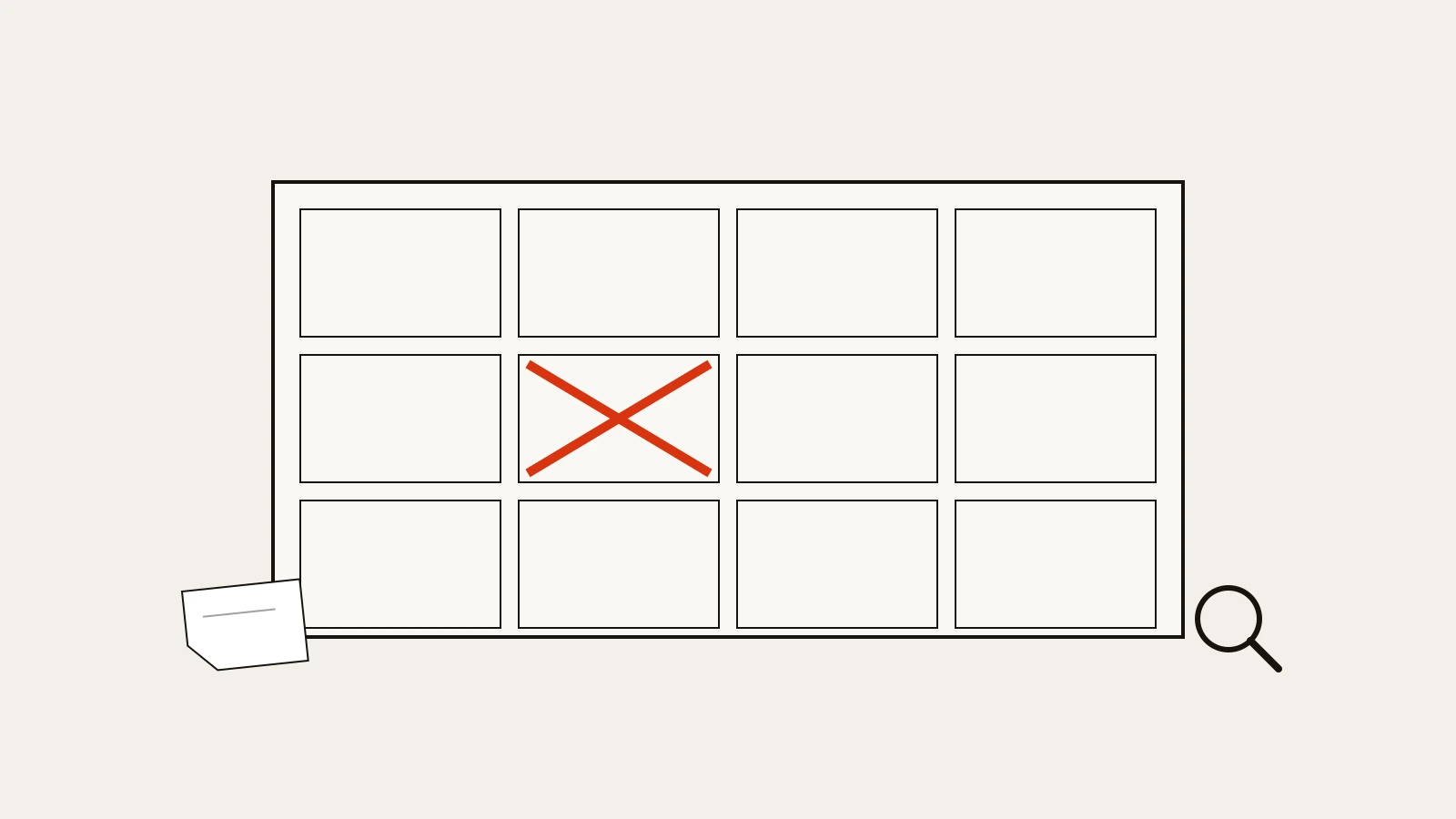
Six things can happen to a YouTube video, and only one is removal
| Outcome | What actually happens | What causes it |
|---|---|---|
| Global removal | The URL dies everywhere and the uploader is notified, usually with a strike attached | A policy report, a copyright removal request or a privacy complaint |
| Blocked on legal grounds | The video stays live worldwide; viewers in one country get a legal notice instead | A court order or a national legal demand |
| Age-restricted | Signed-out viewers, under-18s and most embeds lose access; the URL survives | Review of borderline content, usually after a report |
| Limited features | Comments and sharing switch off and the video stops surfacing in search and suggestions | Review of content that sits just inside the rules |
| Edited, trimmed or made unlisted | The uploader blurs a face, cuts a section or hides the video to avoid losing it | A privacy complaint, acted on inside the uploader's own window |
| Left up but de-indexed | The video survives on YouTube and disappears from the search results carrying it | A search removal or erasure request, filed with Google rather than YouTube |
Most guides compress that table into one word. You file, it goes, done. Cases rarely behave so neatly, and the middle four rows are where a great many of ours land. Anyone typing how to get a video taken down from youtube is picturing row one, and will often settle happily for row two or row four once they learn those exist.
Two of those rows deserve naming properly, because they almost never appear in the results for this question. Blocked on legal grounds is a country-level action: YouTube leaves the upload live everywhere else and serves a notice to viewers in the one jurisdiction that demanded it. That is the standard response to a national court order, and for a UK claimant it is frequently the realistic ceiling rather than a consolation prize, because a British court's authority stops at the border while YouTube's servers do not. Limited features is quieter still. The video stays up, loses comments and sharing, and stops appearing in search results and suggested feeds, which strips away most of its reach while the URL itself sits untouched. For a video that was only ever damaging because it kept being recommended, that is close to a complete answer. Neither row is a failure. Both are often the correct thing to aim at.
The last row belongs to a different company altogether. A video can survive every YouTube process and still stop showing up in Google, because de-indexing is filed with the search engine, not the platform. Removal and suppression are separate jobs with separate paperwork, which is the argument we set out at length in why deletion and burial are separate jobs.
One boundary before the routes. This page is about a single video. When the problem is the whole account — every upload, the banner, the handle — the object you name changes and so does the outcome, which is the subject of when the whole channel is the problem. And if you arrived believing that a large enough pile of flags forces any of these six rows, the ceiling is published arithmetic rather than a matter of opinion; we worked through the arithmetic behind the report button in full. What follows is how to get a YouTube video taken down where that is genuinely available, and what to do instead where it is not.
Can I get a YouTube video taken down? Standing decides that before wording does
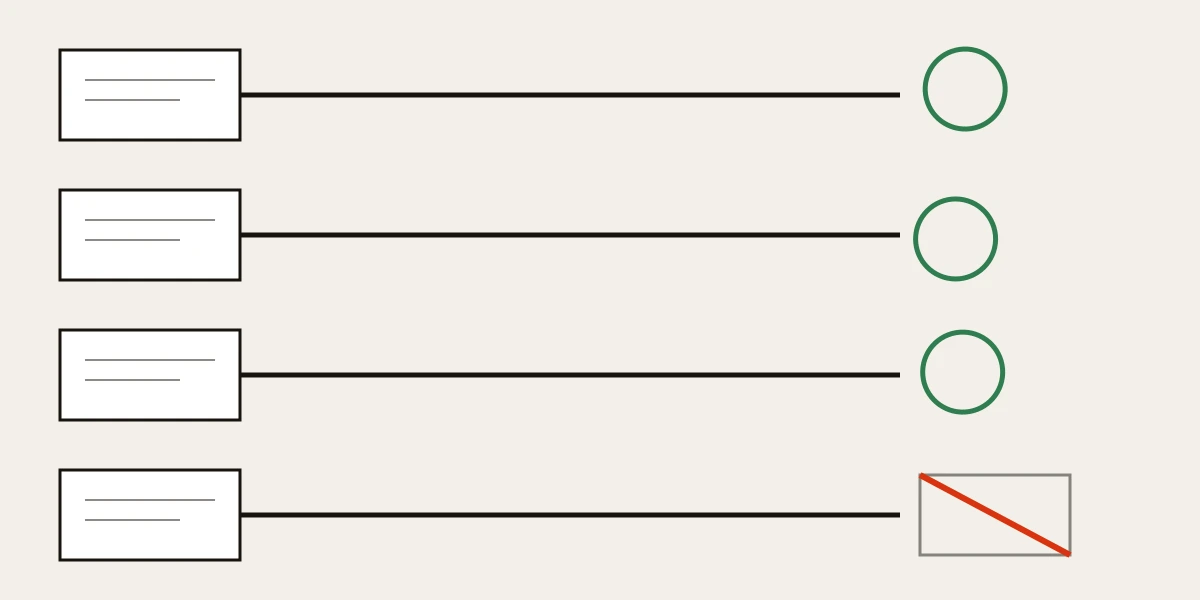
A reviewer answers one question before reading a word of your complaint: what are you to this content? Four answers carry an instrument. Everything else carries a button.
A bystander. You found it, it bothers you, it is not about you and you did not make it. Your route is the Community Guidelines report, and it only reaches content that breaches a published rule. That is a real power, but a narrow one.
A rights holder. You own the footage, the recording, the artwork or the music being used. Your route is a copyright removal request, which is a legal notice rather than a complaint form, and it is comfortably the heaviest lever a private person can pull on YouTube.
An identifiable subject. You appear in the video, or your face, home, number plate, address or ID document does. Your route is a privacy complaint, and it turns on whether you are uniquely identifiable rather than on whether a policy was broken. The bar is lower and the argument is shorter.
A claimant holding a judgment. A court has already ruled the content unlawful. Your route is that order, and it is the only instrument that genuinely reaches defamation.
So the useful question is never how to get YouTube to take down a video in the abstract. It is which of those four you are, and whether you can evidence it inside one submission. Sorting what a user controls from what only a platform controls is the whole discipline here, and it is the subject of what a user controls versus a platform. The same four-way sort produces the five instruments that reach X, which is worth reading alongside this if the same material has been mirrored there.
How to ask YouTube to take down a video when you hold no instrument
Being a bystander is the most common position and the least well served by search results. You still file, you simply file accurately. Open the video, use the three-dot menu under the player, choose Report, and pick the specific sub-reason rather than the nearest broad one. Harassment goes under harassment. A dangerous act goes under harmful or dangerous content. Sending it to spam because spam is the first option in the list is how a genuine complaint dies quietly.
Two habits improve a bystander filing more than any wording trick. Give a timestamp, because a reviewer works in minutes and will watch the segment you point at rather than the whole upload. And report the object that actually breaches: the comment if a comment is the problem, the video if the video is, the channel only when the pattern runs channel-wide.
What you cannot do is buy your way past the standing test. Search how to request youtube to take down a video and a layer of paid listings appears alongside the guides, offering removal for a fee. The pricing tells you what is being sold. We took apart what the invoice really covers on Instagram, traced the same structure through what $250 actually buys on TikTok, and found vendors claiming copyright they lack on X. Telegram sellers blur the line most aggressively of all, which is why two different purchases, one pitch is worth reading before anyone pays a deposit. A vendor with no standing files the same report you could file for nothing, and a vendor who invents standing exposes you rather than themselves.
How to get someone's YouTube video taken down through the report route
The report route works, within limits that are easy to state. YouTube removed 12,139,839 videos in the third quarter of 2025, and more than 97 per cent of them were caught first by automated systems rather than by a human flag (Google Transparency Report). Read that number the right way round. It does not mean reports are pointless. It means the machine has usually already seen anything obvious, so the reports that genuinely change an outcome are the ones describing something a classifier cannot judge on its own: context, identity, a pattern running across several uploads, a sentence that only reads as a threat once you know who is being addressed. A model watching that video in isolation sees a person talking. You are the one who can tell YouTube whose address that is, which court case the clip is really about, or why a name spoken twice at the eleven-second mark is the entire violation. Everything else in the submission is decoration around that.
Four categories reach a single upload reliably in our casework. Harassment aimed at a named person. Non-consensual intimate imagery. Impersonation, where the video presents itself as somebody it is not. And content that endangers a minor, which moves faster than anything else on the platform. Community Guidelines apply to every upload regardless of visibility, including unlisted and private ones (YouTube's own policy note), which is why visibility is never immunity — though you cannot flag a private video you were never given access to open.
Choosing the right category matters more than writing a persuasive paragraph, an argument we make about choosing the form that can act and one that holds across every platform we work on. Meta counts violations, not senders. On TikTok, classifiers act before any flag lands. YouTube behaves the same way, and the reviewer opening your report has already been told what the automated pass concluded.
How to take down someone's YouTube video without wasting the filing
Capture first. Screen-record the video, note the URL and the upload date, screenshot the description and the pinned comment, and save the timestamps you intend to cite. Content under scrutiny gets quietly edited, and a reviewer who opens an edited upload finds nothing and closes the case. That lesson reached us most sharply through evidence that will not wait on Snapchat. It applies here whenever the uploader is paying attention.
Then file once, properly, rather than six times in a week. One accurate submission with a timestamp, a named policy line and a clear statement of who is harmed beats a stream of vague ones. Repeat filings on the same URL do not stack into pressure. They collapse into one case with a longer sender list.
How many reports to take down a YouTube video? There is no number
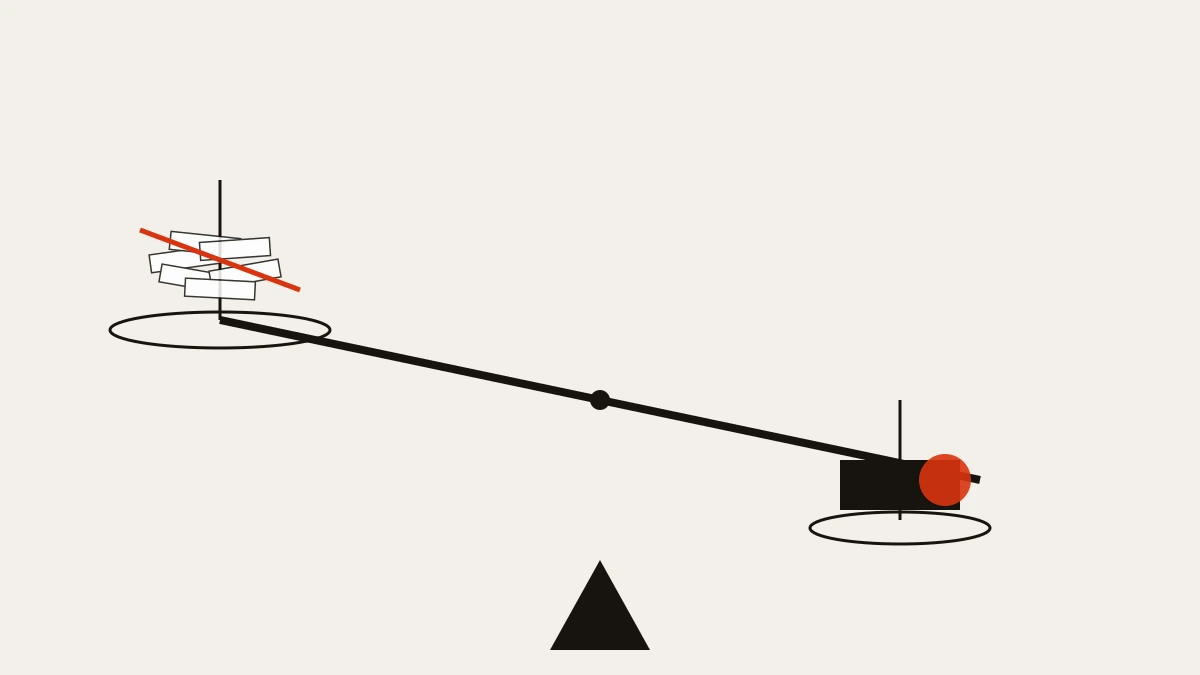
None.
There has never been a threshold, YouTube has never published one, and no seller has ever produced evidence of one. The platform counts violations, not votes. A single accurate report on a clear breach outperforms a thousand vague ones, and a thousand vague ones carry a cost the sender rarely anticipates: YouTube's transparency documentation describes systems that identify suspicious or exceptionally high flagging volumes and exclude those flags from the published figures entirely. A brigade does not merely fail to persuade. It gets filtered out, and the filtering leaves a record attached to the accounts that produced it.
People ask this question in two forms, how many reports to take down a youtube video and how many reports to get a youtube video taken down, and both are really asking whether volume is a substitute for standing. It is not. The market that sells volume is worth understanding precisely because its own mechanics answer the question. X ships no bulk endpoint at all, so the tools sold for it are wired to something else entirely. Snapchat is a product with nothing to call. On Instagram we traced four sources, one dead end, and the Telegram panel trade runs the same shopfront with different branding. Facebook markets three products under one name, and the WhatsApp version is the most expensive of the lot, because buyers hand over their own account to use it.
What the target experiences during a wave is not what the buyer is promised either, something we documented in what the target actually experiences. And the vocabulary these sellers borrow — bots, panels, guaranteed queues — has a long history of meaning nothing, which is a myth with good branding.
What "how to get a YouTube video taken down reddit" actually returns
Very little that is usable, and it is worth knowing why before you spend an evening there. The threads that surface are mostly creators discussing their own removals, arguments about fair use, and the occasional person asking the exact question you are asking and receiving no answer. Almost nothing describes a completed third-party takedown, because the people who complete them have no reason to post about it and every reason not to.
The genuinely useful signal in those threads is negative. Nobody reports a report-count threshold working. Nobody documents a paid service producing a removal that the underlying facts did not already justify. When a search this heavily commercialised produces no first-hand success stories, that absence is itself a finding.
A youtube take down notice is a legal document, not a complaint form
Here the register changes completely. A copyright removal request is filed under the notice-and-takedown regime the US Copyright Office sets out, and YouTube's own copyright removal form demands things a report never asks for: your legal name and address, identification of the specific work you own, the URL of the infringing video, a statement of good-faith belief that the use is unauthorised, a statement made under penalty of perjury that you are the owner or their authorised agent, and a signature.
Every one of those is a hook. A false statement in a youtube take down request is not a rejected form, it is a sworn false statement, and YouTube states plainly that fraudulent notices can terminate your own account and bring legal consequences. This is why we will not file a notice on work a client does not own, however strongly they want the video gone.
That is the sharpest boundary on this page, and we would rather lose the instruction than cross it.
Three mechanics that competitors consistently omit are worth having before you file. The form offers a delay of seven days before the strike lands, letting the uploader remove the video themselves and avoid it — useful when your aim is the video rather than the person. The uploader can send a counter-notification, after which you have ten US business days to start a lawsuit or the video comes back and the strike clears. And the perjury exposure runs one way only: it attaches to copyright notices, not to Community Guidelines reports. Anyone telling you that a policy report carries the same legal risk has confused two separate rulebooks.
Content ID: how to take down a YouTube video without a strike
If you hold rights at scale there is a route that removal-focused guides skip entirely, because it is not a takedown at all. Content ID matches your reference file against uploads and lets you monetise, block, mute or track the match. The video comes down in the block case without any legal notice being filed and without a strike being issued, which means no counter-notice clock and no §512(f) exposure.
The numbers explain why rights holders behave the way they do. More than 90 per cent of Content ID matches are monetised rather than removed, and only 0.51 per cent are ever disputed, out of roughly 2.5 billion claims in 2025 (YouTube Copyright Transparency Report). Blocking is available and mostly unused. When our clients hold genuine rights and simply want an upload gone quietly, this is often the least combative route to it, and YouTube's Content ID documentation is explicit that a claim is not a strike.
Not sure which of the four you are? Send us the URL and nothing else. We read it, tell you which instrument fits and what it can realistically reach, and say so plainly when the honest answer is suppression rather than removal. Bring us the video — the assessment is confidential and free, and we never ask you to send the material itself.
When the video is about you rather than filmed by you
This is the position most of our clients are in, and it has its own instrument. A privacy complaint does not require you to prove a guideline was breached. It requires you to be uniquely identifiable in the content — your face, your full name, financial details, your home, a contact number or an identity document — and to file personally or through a named representative. Uniquely is the operative word, and it is where most of these complaints fail. A blurred figure in the background of a street scene is not uniquely identifiable. The same figure named in the title, or standing beside a visible house number, is. The uploader then gets a short window to edit, blur or delete the material before YouTube's team reviews it, which is why so many of these cases finish in row five of the table above rather than row one, and why filing before the uploader knows you are watching beats filing after an argument in the comments.
Non-consensual intimate imagery is handled differently and faster. Hash-matching through StopNCII.org blocks the material across participating platforms without the image ever leaving your device, and we start these cases the same day they arrive, without charge and without asking anyone to send us the material. That last part is not a courtesy. It is the only responsible way to run this kind of intake.
Defamation is where expectations and reality separate hardest. YouTube does not remove a video because someone says it is untrue; it removes on a valid court order sent to its legal support address. So a defamation route is a litigation route, and its realistic output is often a country-level block rather than global deletion. Where the claim is strong and the defendant is reachable, that is a genuine outcome. Where the claim is weak, filing anyway produces a public court record and a considerably larger audience for the video.
Which brings the honest part. We cannot remove truthful reporting, a genuine public record, or an opinion someone is entitled to hold, and neither can anyone else — not through YouTube, not through a court, not for any fee. What is available instead is suppression: pushing the video out of the results people actually see, filed with Google rather than YouTube and working on the index instead of the upload. We will not forge a notice, bluff a lawsuit, or ask you for a password to make any of it move faster. That refusal is not squeamishness; a forged notice hands the other side a perjury claim and a story. Our published limits say the same in plainer language, and are worth reading before you engage anyone in this industry, ourselves included. The same scope honesty runs through what cannot be banned on request, and the drafting discipline behind a lawful video filing matches getting a TikTok removed lawfully. The people who prepare these filings are listed on this desk.
Why did YouTube take down my video, and what to do about it
A meaningful share of the people searching this cluster are on the other side of it: their own upload has gone and they want it back. The removal notice YouTube sends names the policy it applied, and that line is the whole starting point. A first breach normally produces a warning rather than a strike. Copyright removals arrive with the claimant's details attached, which points you at the counter-notification route and the ten-business-day clock. Privacy removals do not name the complainant at all, by design.
Appeal from YouTube Studio, once, addressing the specific policy line rather than your intentions. Reuploading the same video while an appeal is open is the reliable way to turn one problem into two. If your video was removed after a coordinated reporting campaign rather than a genuine breach, say so in the appeal and include what you have — timestamps, screenshots of the accounts involved, anything showing organisation. That is a category YouTube already polices, and it is treated as an offence by the reporters rather than by you.
What survives youtube video removal: reuploads, embeds and the index
A dead URL is not the end of the job, and pretending otherwise is how a firm produces a happy invoice and an unhappy client three weeks later.
Three things routinely outlive a successful takedown.
Reuploads come first. One removal against a determined uploader produces a mirror within hours, sometimes on a second channel created for the purpose. Copyright cases handle this better than policy cases do, because a rights holder can file against each copy and the strikes accumulate on a published counter. Policy cases need the pattern documented instead: same content, same target, multiple channels, filed as one narrative rather than as unrelated complaints.
Embeds come second. A removed video leaves a dead player behind on every site that embedded it, and those pages keep ranking on the person's name with the original headline and description intact. The video is gone and the accusation is still on page one. Those pages are a separate job with separate routes.
The index comes third, and it is the one people discover last. Search results referencing the video can persist for weeks after the upload itself has gone, because Google recrawls on its own schedule and a cached title sitting under someone's name does the reputational damage whether or not the player behind it still works. Where the video was never removable in the first place — truthful, lawful, and simply unwelcome — the index is the only place left to work at all. That means a search removal request filed with Google rather than YouTube, an erasure filing where European or UK data protection law gives you standing, and owned material built deliberately to outrank whatever remains. All of it is slower than a takedown, none of it deletes anything, and it is frequently the difference between a case that genuinely resolves and one that merely closes.
If you want the rest of the reasoning that sits behind this page, the full briefing library covers the same instruments across every major platform. And if you have a specific URL in front of you, send it to us rather than guessing which of the six outcomes is available — that assessment takes us minutes and costs nothing.